Skip to content
Alloy Theory

Metal Alloys

Metal Alloys in Vehicles

Steel and aluminum form most vehicle structures. Learn how their grades differ and why engineers choose each.
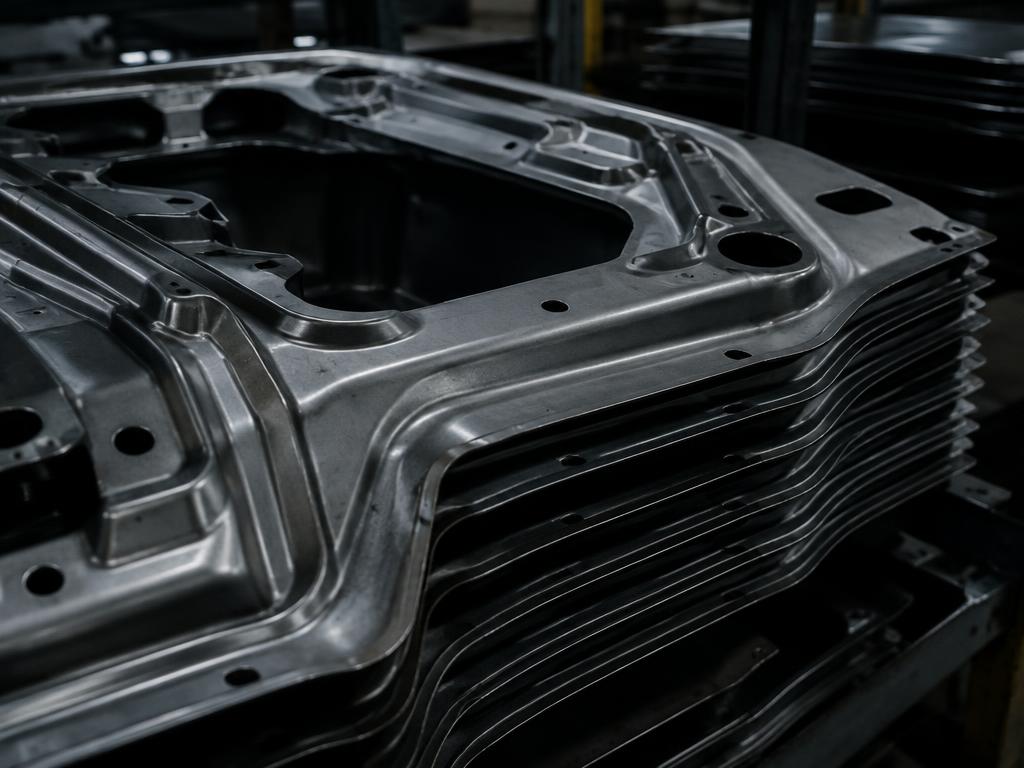
Stack of stamped steel automotive body panels

Fe-01

Automotive Steel

The backbone of most vehicle bodies, valued for its strength, formability, and ease of welding.

Learn more about automotive steel
What it is
Steel is an alloy of iron and carbon, often with small additions of manganese, silicon, or other elements. Mild and conventional steels are rolled into thin sheets that can be pressed into body panels and structural parts.
General properties
High density, good tensile strength, excellent formability, and predictable behavior under load. It is easy to weld, repair, and recycle.
Advantages
  • Low material cost
  • Mature, well understood manufacturing
  • Highly recyclable
  • Easy to join by spot welding
Limitations
  • Heavier than aluminum or composites
  • Prone to corrosion without coatings
  • Lower strength grades need thicker sections
Common vehicle uses
Floor pans, outer body panels, doors, hoods, brackets, exhaust components, and many chassis parts.
Why manufacturers choose it
Manufacturers often choose steel when cost, high-volume production, and repairability matter more than saving every kilogram.
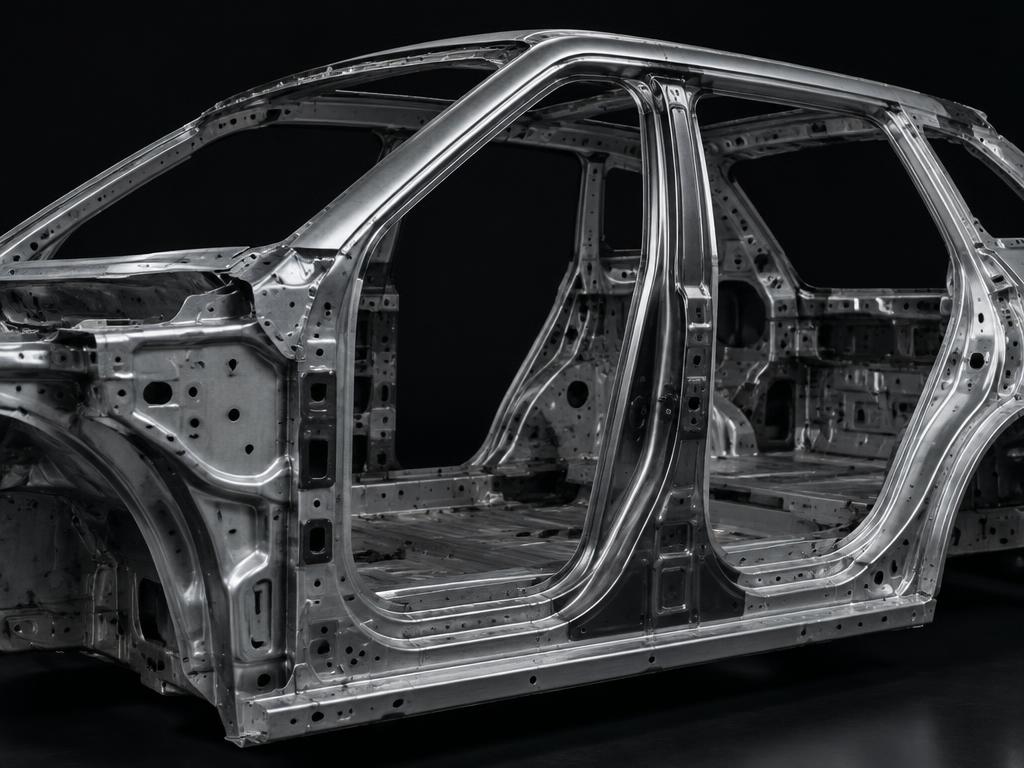
Bare vehicle body structure showing high-strength steel pillars and rails

Fe-02

High-Strength and Advanced High-Strength Steel

Engineered steels that deliver more strength per millimeter, allowing thinner and lighter safety structures.

Learn more about high-strength and advanced high-strength steel
What it is
High-strength steels (HSS) and advanced high-strength steels (AHSS) use controlled chemistry and heat treatment to create microstructures such as dual-phase, martensitic, and press-hardened grades.
General properties
Very high tensile and yield strength, good energy absorption, and reduced formability compared with mild steel. Press-hardened grades are formed hot and quenched in the die.
Advantages
  • Enables thinner, lighter parts
  • Strong crash energy management
  • Works with existing steel infrastructure
Limitations
  • Harder to form and trim
  • Greater springback during stamping
  • Some grades are difficult to repair after damage
Common vehicle uses
A and B pillars, roof rails, rocker panels, door intrusion beams, bumper reinforcements, and crash structures.
Why manufacturers choose it
AHSS lets engineers reduce mass in the safety cage while keeping the cost advantages of steel.
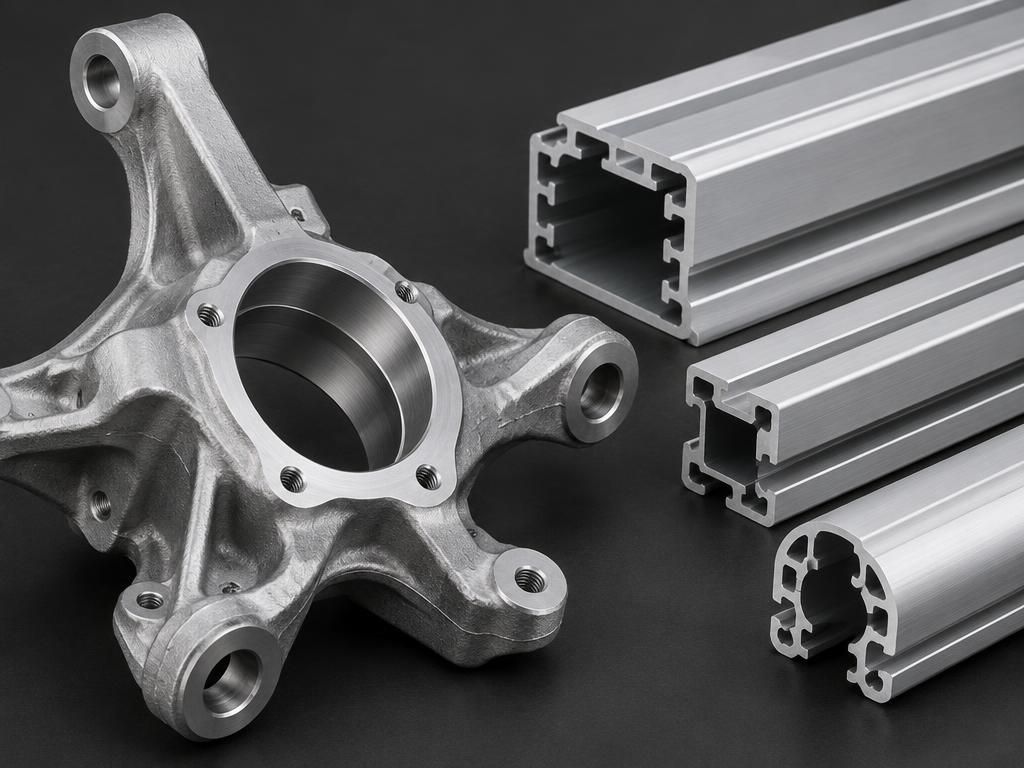
Cast aluminum suspension knuckle beside extruded aluminum profiles

Al-13

Aluminum Alloys

Roughly one third the density of steel, aluminum is a leading choice for lightweight vehicle design.

Learn more about aluminum alloys
What it is
Aluminum alloys combine aluminum with elements such as magnesium, silicon, copper, or zinc. Automotive grades are grouped into cast alloys and wrought series like 5xxx and 6xxx.
General properties
Low density, good corrosion resistance thanks to a natural oxide layer, high thermal conductivity, and good strength-to-weight ratio.
Advantages
  • Significant weight savings
  • Natural corrosion resistance
  • Can be cast, extruded, or stamped
Limitations
  • Higher material cost than steel
  • Requires different joining methods
  • Lower stiffness than steel for the same thickness
Common vehicle uses
Hoods, closures, engine blocks, cylinder heads, wheels, suspension parts, battery enclosures, and crash management systems.
Why manufacturers choose it
Aluminum is often selected where reducing mass improves efficiency, handling, or driving range enough to justify the added cost.
Get SMS Updates