Skip to content
Alloy Theory

Composite Materials

Composite Materials and Carbon Fiber

Fibers and resins combined to create light, stiff, corrosion resistant parts.
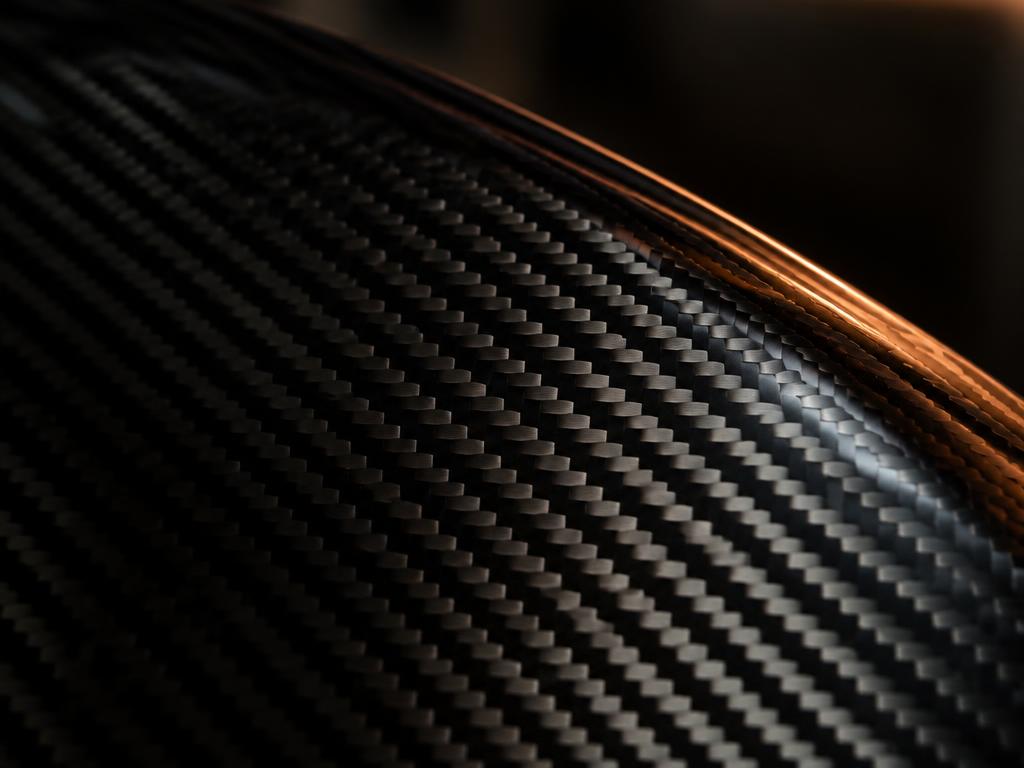
Close-up of woven carbon fiber on a curved automotive panel

C-06

Carbon Fiber

An extremely stiff and light reinforcement, carbon fiber appears in high-performance and specialty vehicles.

Learn more about carbon fiber
What it is
Carbon fiber reinforced polymer (CFRP) consists of thin carbon filaments bundled into tows, woven or laid into layers, and bound together with a resin such as epoxy.
General properties
Exceptional stiffness and strength for its weight, low thermal expansion, and properties that depend on fiber direction.
Advantages
  • Very high strength-to-weight ratio
  • Does not rust
  • Fiber orientation can be tailored to loads
Limitations
  • High material and processing cost
  • Slow cycle times for many methods
  • Complex repair and recycling
Common vehicle uses
Monocoque tubs, roof panels, driveshafts, aerodynamic parts, and interior trim in performance vehicles.
Why manufacturers choose it
Carbon fiber is chosen when minimum weight and maximum stiffness outweigh cost and production volume concerns.
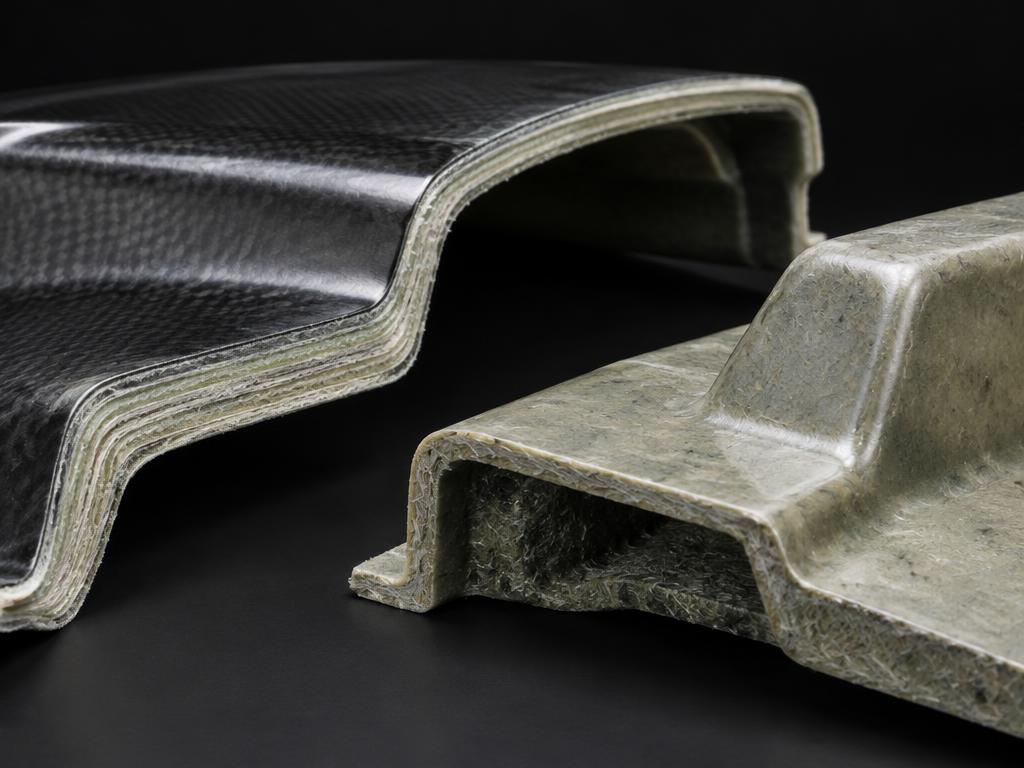
Cross sections of layered fiberglass composite automotive parts

Cm-05

Composite Materials

Engineered combinations of fibers and resins that balance weight, cost, and design freedom.

Learn more about composite materials
What it is
Automotive composites include glass fiber reinforced plastics, sheet molding compound (SMC), and natural fiber composites. Each pairs a reinforcing fiber with a polymer matrix.
General properties
Lower density than metals, good corrosion resistance, and the ability to form complex shapes in a single part.
Advantages
  • Part consolidation reduces assembly steps
  • Resists dents and corrosion
  • Lower tooling cost for some volumes
Limitations
  • Properties vary with fiber orientation
  • Surface finish can require extra work
  • Recycling is more complex than for metals
Common vehicle uses
Tailgates, pickup boxes, leaf springs, underbody shields, battery covers, and body panels.
Why manufacturers choose it
Composites are useful when designers want light, corrosion resistant parts with complex geometry at moderate cost.
Get SMS Updates