Manufacturing Education Center
Manufacturing Processes
- 01
Metal Stamping
Sheet metal is placed between matched dies in a press and formed into shape in one or more strokes.
Typical partsDoors, hoods, fenders, roof panels, and structural brackets.
- 02
Casting
Molten metal is poured or injected into a mold and solidifies into the final shape. High-pressure die casting is common for aluminum.
Typical partsEngine blocks, transmission cases, wheels, and large structural castings.
- 03
Aluminum Extrusion
A heated aluminum billet is pushed through a shaped die, producing long profiles with a constant cross section.
Typical partsBumper beams, roof rails, crash boxes, and battery enclosure frames.
- 04
Injection Molding
Plastic pellets are melted and injected under pressure into a cooled steel mold, then ejected as finished parts.
Typical partsDashboards, bumper fascias, trim panels, clips, and lighting housings.
- 05
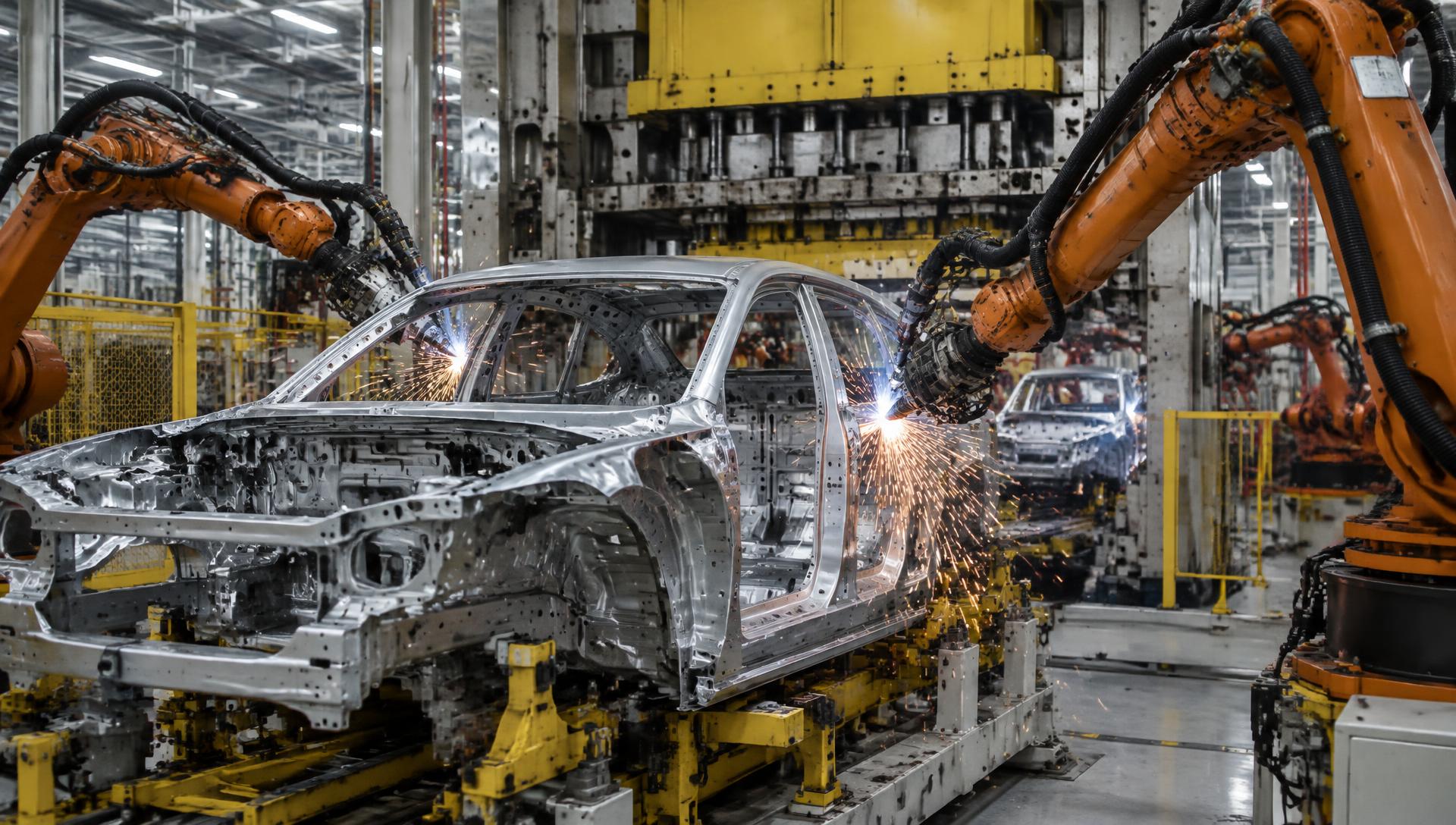
Welding and Joining
Parts are fused with heat or pressure. Resistance spot welding, laser welding, and self-piercing rivets are common in body shops.
Typical partsBody-in-white assemblies, frames, and exhaust systems.
- 06
Adhesive Bonding
Structural adhesives join parts across a continuous surface, spreading loads and allowing dissimilar materials to be connected.
Typical partsMixed aluminum and steel bodies, windshields, and composite panels.
- 07
Composite Manufacturing
Fibers are laid into molds with resin and cured using heat and pressure, through methods such as resin transfer molding or compression molding.
Typical partsCarbon fiber tubs, SMC tailgates, and lightweight body panels.